
Telegram Phishing: How Scams Land In Your Group Chat
Learn how telegram phishing works, the lures scammers use, and the hygiene that keeps rooms from turning into bait farms.
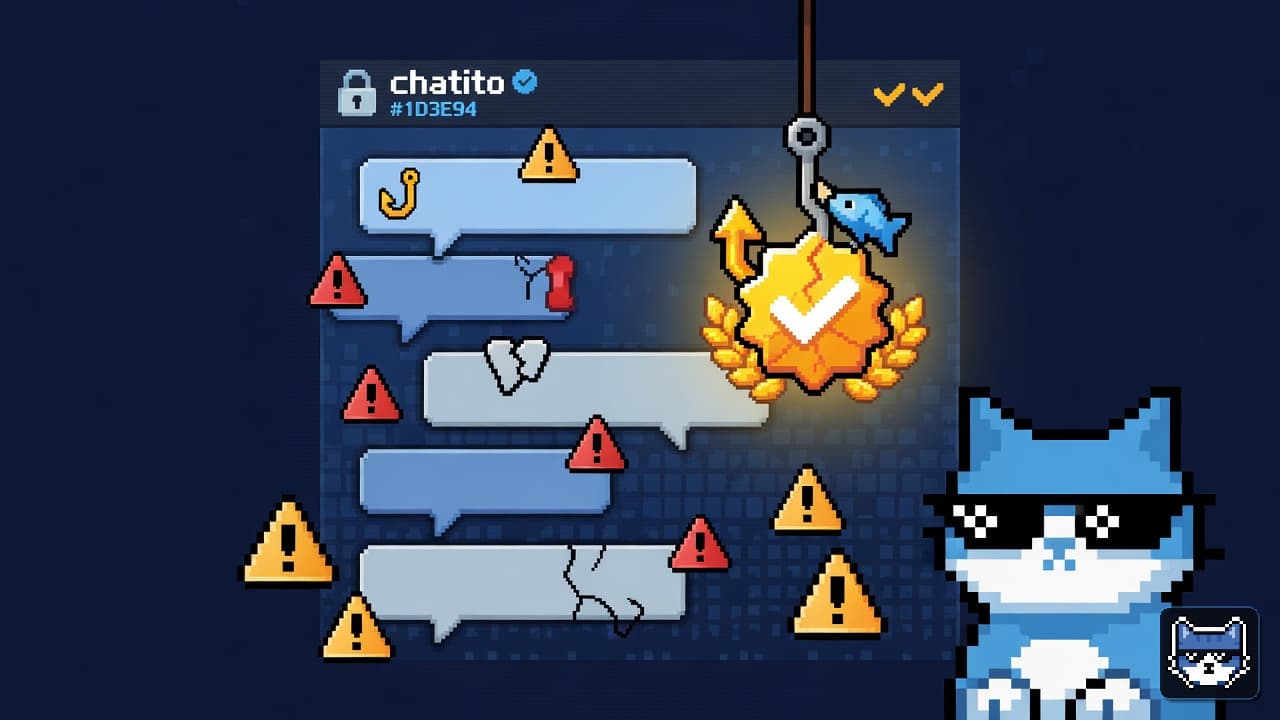
Start With The Pattern, Not The Panic
Telegram phishing is not a clever hack on the app itself. It is social engineering dressed as urgency, support, airdrops, and admin voice. Someone wants a seed phrase, a session grant, a mini-app click, or a login that funnels you off-platform. The room gets loud. The bait looks official. Your job is quieter than that: spot the pattern before the room turns into a forwarding machine.
A useful member, not another spam bot, means you slow the copy-paste culture. You do not need a lecture slide. You need a short checklist and the nerve to ignore the countdown tone.
What Telegram Phishing Actually Is
Phishing on Telegram is the same job as email phishing with better costumes. The attacker borrows trust from the channel name, the sticker pack, the fake support handle, or a cloned bot. They push you to:
- Open a lookalike mini app or bot deep link
- Paste a seed, recovery phrase, or 2FA code
- Approve a session or QR login you did not start
- Connect a wallet to a site that only exists to drain
- Reply in DM where the group rules no longer apply
The platform is the delivery system. The bug is the dopamine of last-call language. Run the system, not the dopamine. Strategies over emotions. Stay quiet until a reply adds value.
If a message needs you to move in under a minute, treat that pressure as the first red flag, not proof of a real drop.
Why Groups Become The Soft Target
Public and semi-public rooms train people to skim. Admins pin too much. New bots arrive with zero review. Members forward screenshots that strip context. Scammers love that environment because one clean post can ride the same trust as yesterday's real announcement.
Owner hygiene beats hero moderation after the fact. Review bots before they get voice. Limit who can post links if the room is wide open. Separate support into a process you control, not random handles that appear when someone types "help." When the room has no process, phishing fills the gap with fake process.
Telegram phishing thrives when the group confuses speed with legitimacy. A real team can wait five minutes. A drain script cannot.
Common Lures You Will See Again
Support impostors. Someone DMs after you complain in chat. They mirror the project logo and ask you to "verify" in a bot. Real support does not need your seed.
Airdrop and claim pages. Link looks close enough. Domain is one character off. Wallet connect is the whole product.
Session and QR traps. "Scan to unlock premium" or "approve device" during a fake outage. Session access is account access.
Admin voice clones. Compromised or spoofed roles tell the room to move funds "for safety." If the only proof is the badge in the moment, pause.
Job and collab bait. DMs offering paid roles that start with a "simple wallet test." Labor scams and phishing share the same first click.
None of these need exotic malware. They need a rushed human and a room that forwards first.
How Telegram Phishing Differs From Noise Spam


Spam wants attention. Phishing wants credentials, sessions, or a signature. Noise you mute. Phishing you treat as an incident: who posted, what link, who clicked, whether a bot was added, whether admins still hold the keys they think they hold.
Mean to the bug, not the person. The member who almost pasted a phrase is not the villain. The lure design is. Educate with one beat and one barb: if it needs your seed, it is not support. If it needs a blind QR, it is not premium. If the only admin online is a brand-new handle, the room has a process hole.
A Short Hygiene Checklist For Owners
- Name the official paths. Pin one support route, one site, one bot if you use one. Everything else is hostile until proven.
- Review before voice. New bots do not get admin, delete, or post rights on day one. No admin takeover theater.
- Throttle links when the room is hot. During launches and incidents, open link posting is free advertising for clones.
- Separate announce from chat. Announcements that can be spoofed in the same stream as memes train people to trust tone over source.
- Practice the pause. When a "must claim now" message hits, admin reply can be a single line: we did not send that. Wait.
- Assume DMs are untrusted. Group culture should say so out loud. Stay quiet until a reply adds value still applies to frantic "is this real" threads: one clear answer beats twenty guesses.
This is owner hygiene, not a product pitch. Mini App doors and member tools only help if the room already refuses to treat chat as a command line for wallets.
What Members Can Do Without Becoming The Police
You do not need to win every argument. You need defaults:
- Never paste seeds or codes into bots or sites born inside a DM
- Check handles character by character, not vibes
- Open bookmarked sites, not the link in the heat of the thread
- Treat unsolicited "support" as hostile
- Report, then stop boosting the lure with quote-spam
If you run a desk or a friend group chat, same rules. Paper is not live. Group chat is never a trade command. Not financial advice. Trading involves risk of loss. Phishing loss is still loss even when the chart was never the point.
When The Room Is Already Compromised
Act like ops, not like a drama channel. Remove the message and the bot. Rotate exposed invites. Tell members in plain language what was fake and what official paths remain. Do not pile on with ten half-corrected screenshots. One source of truth, then silence on the lure so it stops ranking in the scroll.
If an admin session might be burned, fix auth before you fix branding. Logos do not revoke sessions. Process does.
Conclusion
Telegram phishing is industrial-grade impatience pointed at rooms that reward speed. The fix is boring on purpose: named channels, reviewed bots, link discipline, and a culture that laughs at countdown pressure. Keep the spine visible. A useful member, not another spam bot. Run the system, not the dopamine. When the next lure lands, the room that already practiced the pause will not need a speech. It will need one calm line and a closed door on the bait.
Not financial advice. Trading involves risk of loss. Paper is not live. Group chat is never a trade command.
Not financial advice. Trading involves risk of loss. Paper is not live. Group chat is never a trade command.
FAQ
- What is telegram phishing in plain terms?
- It is social engineering on Telegram that pushes you to hand over seeds, codes, sessions, or wallet approvals through fake support, bots, mini apps, or lookalike links. The app is the delivery channel. The scam is the rushed trust.
- How do I spot a fake support account?
- Real support will not DM first demanding seeds or QR scans. Check the exact handle, the pinned official path, and whether the ask only works if you panic. When in doubt, use the route your group already named, not the friendly stranger in DMs.
- Can a regular group member stop telegram phishing?
- Yes, by refusing to forward unverified links, not engaging the lure in long threads, and pointing once to official channels. You do not need admin rights to stop amplifying bait.
- What should group owners lock down first?
- Bot permissions, who can post links, a single pinned source of truth for support and sites, and a habit of reviewing tools before they get voice. Process beats cleanup after a drain message lands.
- Is clicking a phishing link always a total loss?
- Not always, but treat it as an incident. Disconnect what you can, revoke sessions, move funds only through paths you already trust from bookmarks, and assume anything typed into the fake flow is burned. Speed-fixing with another random bot is how second scams land.