
Telegram Wallet Drain: How Rooms Quietly Empty Connected Wallets
Learn how a telegram wallet drain works in group chats, what red flags look like before you connect, and the hygiene that keeps rooms from becoming exit doors.
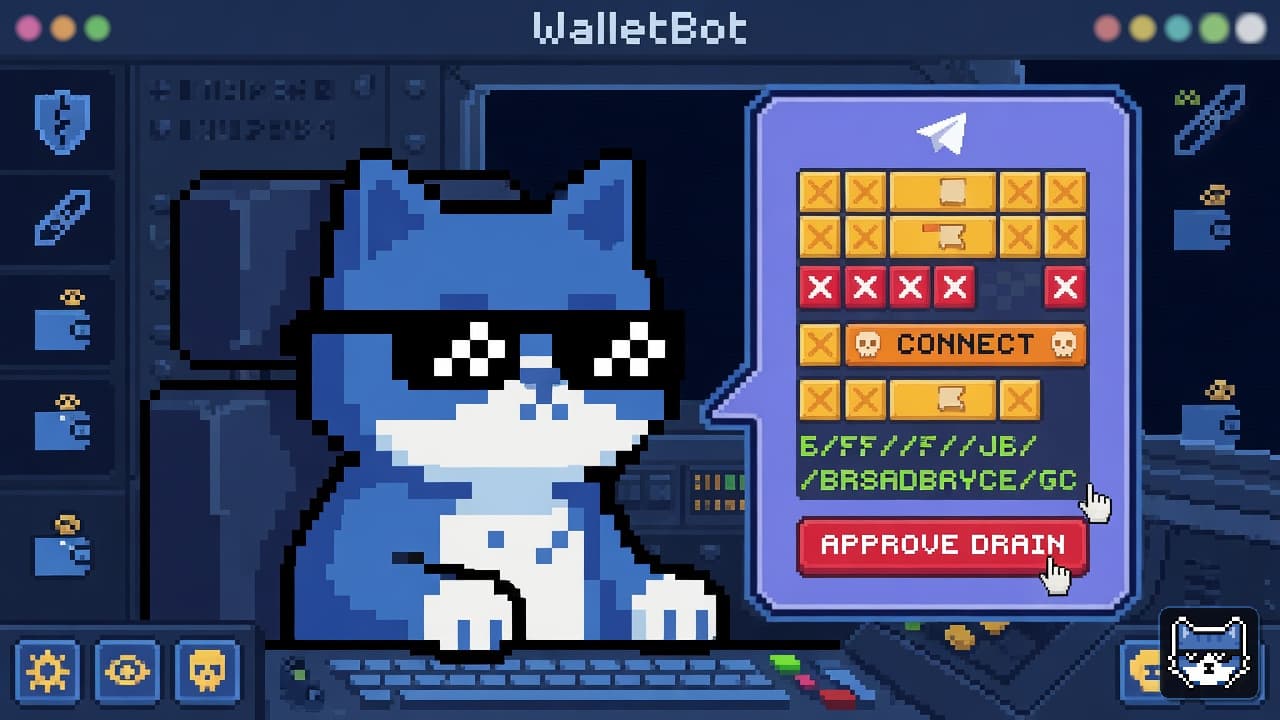
A telegram wallet drain does not always look like a smash-and-grab. It often looks like a helpful bot, a verified sticker pack, a Mini App door, or a "support" DM that arrives two minutes after you asked a normal question in chat. The loss happens after you approve something you did not fully read.
This post is about process, not panic. If you run a Telegram room or you hang out in one, wallet drains are a hygiene problem first. Treat them like a systems failure you can reduce with rules, not like a horror story you retell for dopamine.
What A Drain Actually Is
Strip the drama. A wallet drain is unauthorized or over-authorized access that moves assets out of a wallet you control. On Telegram the social layer is the bait. The chain layer is the transfer.
Common patterns:
- A bot or Mini App asks you to connect a wallet "to verify," "to claim," or "to unlock chat perks."
- A phishing site mirrors a real brand and sits behind a shortened link in chat.
- A fake admin DM offers recovery after a "hack report" that the scammer created.
- An airdrop page requests a signature that is not a harmless login. It is an approval, a permit, or a malicious contract interaction.
- A "security update" seed phrase form. That one is not clever. It is still effective because people freeze under pressure.
Notice the shared move: urgency plus social proof plus a single tap that skips review.
Why Telegram Makes Drain Attacks Stick
Telegram rooms compress trust. You see the same usernames every day. Stickers feel like friendship. Pinned messages feel official. That is useful for community. It is also useful for social engineering.
Scammers abuse a few room defaults:
- Open DMs after someone posts a wallet question.
- Bots with admin-looking names that are not admins.
- Forwarded "news" without a primary source.
- Mini Apps launched from chat without a review step.
- Mute-and-ignore culture where nobody challenges a link until funds move.
Run the system, not the dopamine. If your room rewards the fastest reply over the cleanest process, you built a funnel for drains.
Telegram Wallet Drain Paths Owners Still Miss
This is the section many groups skip because it sounds boring. Boring is the point.
Connect prompts with no purpose. If a feature does not need chain permissions, do not ask for them. "Connect to view the roadmap" is a smell.
Unlimited approvals framed as convenience. Users click through permit screens they do not understand. Your room should never frame blind signing as normal.
Support theater. Real support does not need your seed. Real support does not rush you off-platform into a private "ticket bot" you never appointed.
Clone bots. Slight character swaps in usernames still work. Pin your real bot handles. Repeat them. Make impostors expensive to sell.
"Free mint" and "guaranteed whitelist" energy. Even when the project is not yours, your chat becomes the delivery network. Moderate the delivery, or own the aftermath.
None of this is financial advice. It is room operations.
A Practical Review Checklist Before Anyone Connects
Teach this until it is muscle memory.
- Who posted the link, and can you verify them outside the message?
- Does the destination domain match the official site character for character?
- What exact permission is requested: read-only session, token approval, contract call?
- Can the action wait ten minutes while someone second-checks?
- Is there a countdown clock designed to kill review?
- Would you still click if the sticker pack and hype music were removed?
If the answer needs vibes instead of steps, stop.
For owners, add room-level controls:
- Slow mode during launches and incidents.
- Clear rule: admins never DM first about wallets.
- A single pinned "how we verify links" note written in plain language.
- Bot permissions stripped to what the bot actually needs.
- No random Mini App launches from unvetted members.
- A freeze protocol when a drain report hits: pause links, announce facts only, no revenge chase in chat.
Stay quiet until a reply adds value. Flooded incident threads create cover for the second wave of fake helpers.
How Members Get Recruited Into Their Own Loss


Drains love people who want to be early, helpful, or right in public.
You post a screenshot of a weird transaction. Three accounts reply with fix-it bots. One of them is real-looking enough. You want the problem gone before your friends see the balance. That emotional spike is the product the scammer sells.
Strategies over emotions. Write the recovery steps when you are calm, not when the room is loud:
- Disconnect suspicious sessions and revoke approvals using tools you already trust, not tools a stranger pasted.
- Move remaining assets only through flows you used before the incident, after you confirm destinations offline.
- Assume DMs during a crisis are hostile until proven otherwise.
- Document what you clicked. Timelines help you, not the chat peanut gallery.
- Do not seed-phrase your way into a second drain.
Paper habits beat heroics. If you never practiced revocation while nothing was on fire, you will accept the first "support agent" who types fast.
Owner Hygiene That Reduces Drain Surface
You cannot make a public room risk-free. You can make drains harder and slower.
Identity. Publish admin list. Rotate display names carefully so impostors stand out. Consider a short verification ritual for mods that members can check.
Bots as members, not messiahs. A useful member, not another spam bot. If your automation spams links, people stop reading links. Then the malicious one blends in.
Mini App as a door, not a casino lobby. If you use a Mini App, treat onboarding like a gate with copy that explains what is never requested: seeds, blind unlimited approvals, private keys.
Incident posts without theater. State what happened, what you verified, what members should not click, and when the next update lands. No revenge pledges. No "we will hunt them" fanfic.
Education beats aftercare cosplay. One clear monthly note on approvals beats twenty sad emoji reactions after someone is emptied.
What Not To Do When Someone Gets Hit
Do not crowd-source chain forensics from anonymous heroes.
Do not pin unpaid "recovery specialists."
Do not share the victim's tx hash circus if it creates more targeted phishing.
Do not turn the room into a live trading floor trying to "make it back." That is how secondary losses stack.
Do not pretend a witty roast of the scammer refunds the wallet.
Mean to the bug, not the person. The bug is FOMO, fake urgency, and unreviewed permissions. The person already paid tuition.
Building A Culture That Outlasts The Next Script
Scripts change. Human shortcuts do not.
Reward members who slow a bad link down. Thank the killjoy who asks for the source. Make "I am not connecting yet" a high-status move.
If you write rules, write them like operators:
- Links need a source.
- Wallet connects need a reason.
- Admins do not DM first.
- Support never asks for seed phrases.
- Reports go to a defined channel, not twelve threads.
Then enforce without main-character speeches. Consistency is the product.
Chatito Bot exists in this lane as brand posture: useful member energy, review before voice, no admin takeover cosplay, no promise that software deletes human risk. Visit https://chatito.bot for the public face of that posture. No pitch deck voice here. Just the standard: quiet until value, process over adrenaline.
Closing The Loop On Telegram Wallet Drain
A telegram wallet drain thrives where rooms confuse activity with safety. Connection prompts, fake support, and Mini App doors all work better when nobody wants to look careful.
Slow the click. Verify the domain. Read the permission. Pin the real handles. Freeze cleanly when something breaks. Teach revocation before you need it.
Run the system, not the dopamine. That will not make every wallet immortal. It will make your room a worse hunting ground, which is the honest goal.
Not financial advice. Trading involves risk of loss. Paper is not live. Group chat is never a trade command.
Not financial advice. Trading involves risk of loss. Paper is not live. Group chat is never a trade command.
FAQ
- What is a telegram wallet drain in plain terms?
- It is a loss path where Telegram social pressure leads you to approve a malicious connect, signature, fake support flow, or phishing site that lets assets leave your wallet. The chat is the bait. The chain action is the theft.
- Do I need to share my seed phrase for a bot to help recover funds?
- No. Any recovery pitch that demands your seed phrase is hostile. Real process uses session revoke, approval revoke, and careful transfers you control. Seeds are not support tickets.
- How can group owners reduce drain attempts without killing chat?
- Pin verification rules, ban admin-first wallet DMs, strip bot permissions to need-to-have, slow mode during chaos, and one clear incident protocol. Reward people who challenge shady links instead of mocking caution.
- Are Mini Apps always unsafe?
- No. The risk is unreviewed doors plus vague permission requests. Treat each Mini App like a product gate: known source, stated purpose, no seed collection, no blind unlimited approvals framed as perks.
- What should I do first if I already clicked a bad link?
- Stop following chat heroes. Disconnect unknown sessions, revoke suspicious approvals with tools you already trust, secure remaining assets carefully, and ignore DMs offering miracle recovery. Document what you signed for your own timeline.